
Fortified Wines in Cocktails
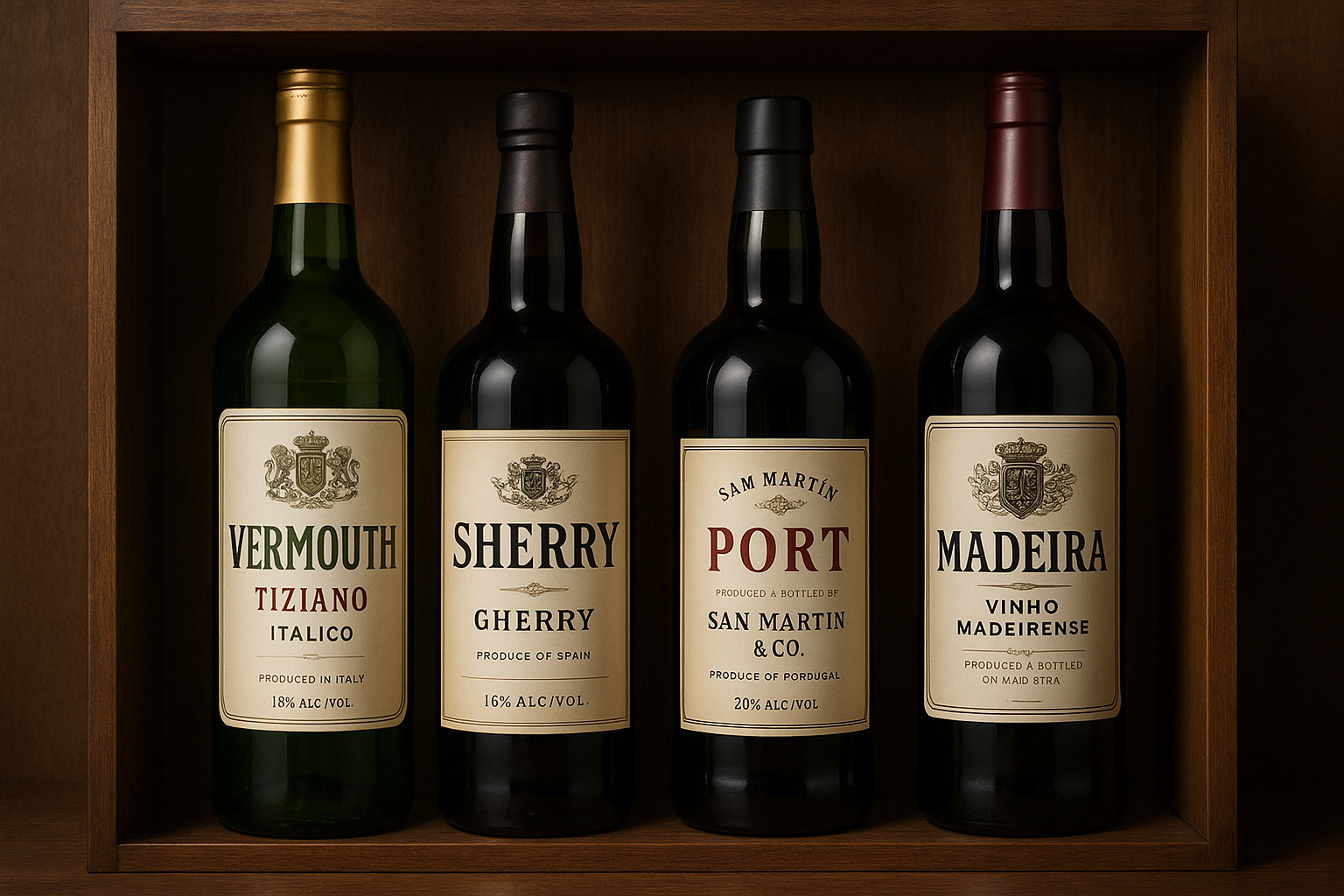
Vermouth, Sherry, Port, Madeira
November 8, 2025
Why fortify, and why it matters in drinks
Fortification does two things that matter to bartenders. First, it increases alcohol to a typical range between the mid teens and low twenties by volume, which limits oxidation and spoilage compared with table wine. Second, depending on when fortification happens in the fermentation process, you get either dry styles with very little residual sugar or sweet styles with natural grape sugar remaining. That decision shapes how the wine behaves in a cocktail. Dry fortified wines act like structural components, adding salinity, nutty notes, and acidity. Sweet styles provide richness and weight, which can balance bitterness or boost mouthfeel.
Vermouth
Vermouth is an aromatized, fortified wine flavored with botanicals that traditionally include wormwood. Producers start with a neutral or characterful base wine, add a botanical infusion, sweeten to style, and fortify to about 15 to 18 percent alcohol. Broadly, dry vermouth is lighter, savory, and herbal, often pale in color. Sweet vermouth is richer, spiced, and commonly red in hue due to caramelized sugar or infused coloring. There are also blanc or bianco vermouths that are sweet but pale, useful when you want texture without the color shift.
In cocktails vermouth is foundational. The Martini relies on dry vermouth to bridge gin or vodka with citrus oil and bitters. The Manhattan needs sweet vermouth to round rye or bourbon and to carry bitters in a balanced way. The Negroni uses sweet vermouth as the middle link between gin and bitter aperitivo, which is why changing vermouth brands can completely reset the drink. Ratios matter. More vermouth means a lower overall alcohol content and a silkier palate. Less vermouth yields a sharper, spirit forward profile. For service, treat vermouth like wine. Keep opened bottles refrigerated, minimize oxygen exposure, and aim to use them within a reasonable window for freshness.
Sherry
Sherry is fortified wine from the Jerez region of Spain, made primarily from Palomino grapes, with Pedro Ximénez and Moscatel used for sweet components. After fermentation, wines are aged in a fractional system known as a solera, which encourages consistent style and complexity. Dry styles such as Fino and Manzanilla are typically around 15 percent alcohol and age under a protective layer of yeast known as flor, yielding notes of green almond, bread dough, and sea breeze salinity. Amontillado begins under flor then ages oxidatively, gaining nutty and caramel hints. Oloroso ages without flor, developing deeper oxidative tones. Sweet sherries are either naturally sweet from sun dried grapes or blended from dry wines and sweet components.
Sherry shines in lower alcohol cocktails. The Bamboo, equal parts Fino or Amontillado and dry vermouth with bitters, is crisp and aromatic. The Adonis, equal parts sherry and sweet vermouth with bitters, is rounder and lightly spiced. The Sherry Cobbler, sherry over crushed ice with citrus and a touch of sugar, is both historical and modern friendly. Sherry’s savory dimension also makes it a powerful seasoning in spirit forward builds. A small portion can soften aggressive whiskey or gin, or stand in for a portion of vermouth to reduce sweetness while adding depth.
Port
Port is fortified wine from Portugal’s Douro Valley. Fermentation is arrested partway through by adding grape spirit, which preserves natural grape sugars. Alcohol typically lands around 19 to 22 percent. Styles range from youthful ruby ports that are dark and fruit driven to tawny ports aged oxidatively in wood, offering caramel, dried fruit, and nut tones. Late Bottled Vintage and Vintage ports offer concentration and structure, while white port is usually lighter and fresh.
In cocktails, port delivers richness with balance. The White Port and Tonic, a standard in northern Portugal, is a bright highball that trades gin’s juniper for citrusy, slightly saline white port. Ruby port partners well with brown spirits. The Porto Flip and the Coffee Cocktail are classic templates that use port for body and fruit, often with a whole egg or yolk and a dusting of nutmeg. A float of ruby or tawny port can add color and sweetness to sours, and small measures of tawny can introduce oxidative complexity to whiskey cocktails. Because port carries sugar from the grape, it can reduce or replace added syrups in a recipe.
Madeira
Madeira comes from the Madeira Islands and is famous for resilience. Wines are heated during aging, either gently over years in warm lofts known as canteiro or more quickly using controlled tank heating called estufagem. The result is a wine that is remarkably stable, with flavors of roasted nuts, citrus peel, and caramelized fruit. Alcohol generally sits around 18 to 20 percent. Styles historically align with grape varieties and sweetness level. Sercial is the driest, Verdelho is medium dry, Bual is medium rich, and Malvasia, often labeled Malmsey, is the richest.
In cocktails Madeira behaves like a seasoned stock in a kitchen, it deepens without shouting. The Madeira Cobbler is a dependable showpiece. Madeira can also substitute for part of the vermouth in a Manhattan style build for a nutty, lifted finish. Dry Sercial and Verdelho work well in aperitif cocktails that need brightness without extra sugar. Richer Bual and Malmsey can stand beside aged rum, rye, or brandy, adding roasted flavors that complement barrel notes. A practical advantage is durability. Opened Madeira resists degradation better than most fortified wines, which makes it friendly for bar programs and home bars alike.
Balancing acts, or how to use fortified wines wisely
Fortified wines influence three pillars of cocktail balance. Sweetness gives weight and softens bitterness. Acidity and perceived salinity lift aromatics and keep the finish clean. Oxidative notes add a savory frame that makes a drink taste complete. Choose the fortified wine that fills the gap. If a gin sour feels hollow, a measure of dry vermouth can add herbal length without more sugar. If a stirred whiskey drink needs polish, sweet vermouth or a touch of tawny port will round the edges. If a spritz lacks shape, Manzanilla sherry can add structure while keeping the drink light.
Temperature and dilution matter. Fortified wines show best when cold but not muted. Stirred drinks like Manhattans or Martinis should be chilled enough to feel silky, not icy. Cobblers and spritzes like the Sherry Cobbler or Port and Tonic are designed for crushed or cubed ice, which stretches flavor while keeping aromatics lively.
Buying and storage
Quality varies by producer and style. For vermouth, fresher is usually better for dry styles, while sweet styles are more forgiving. For sherry, pick the style for the job, Fino or Manzanilla for crisp aperitif builds, Amontillado or Oloroso for deeper, nutty cocktails, and cream or PX for dessert style applications. With port, a bright ruby suits sours and flips, tawny brings nut and caramel for stirred drinks, and white port is tailor made for long drinks with tonic or soda. Madeira rewards exploration, since even drier styles carry layered, roasted flavors that hold up in complex builds.
Once opened, refrigerate vermouth and sherry, keep oxygen exposure low, and plan to use them steadily while their aroma is vivid. Port and Madeira are more robust after opening, especially wood aged tawny port and most Madeiras, but cool storage and tidy closures are still good practice.
A quick note on measurement and consistency
Because fortified wines are wines first, their flavor shifts by brand and bottling. Measure with a jigger to control balance, then adjust by a small margin if a particular bottle is especially dry, sweet, or aromatic. This is also why tasting before building is smart. A simple half ounce substitution can transform a drink from sharp to seamless.
Conclusion
Fortified wines are not supporting actors. They are co authors of flavor, writing structure, texture, and nuance into cocktails. Vermouth offers herbs and backbone, sherry brings salinity and finesse, port contributes fruit and richness, and Madeira supplies roasted depth with impressive stability. Keep them fresh, choose styles with intent, and let them do their quiet work. Your cocktails will taste more complete, your ratios will make more sense, and your bar will feel better organized. That is a reliable return from four bottles that have been improving drinks for more than a century.
Cheers,
The Bar Mate Crew